
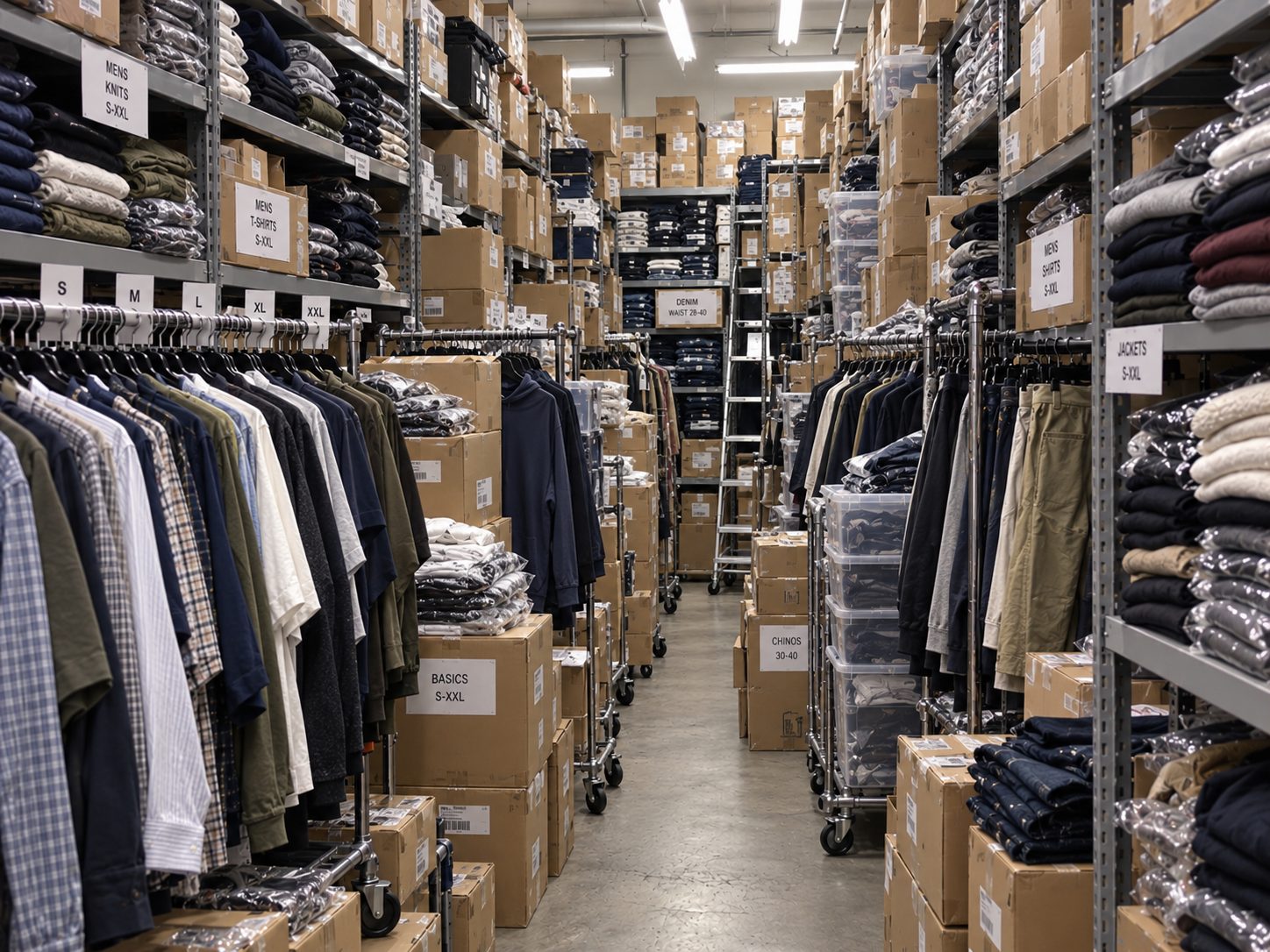
Most retailers don’t run out of space gradually. It happens in a week.
A container lands early, or a supplier finally fills a back order, or you buy well at a trade show. Suddenly the stockroom is full, the boxes are stacked behind the counter, and someone is climbing over a pallet of Christmas stock to get to the fuse box.
You’re paying retail rent per square metre for a floor space that’s meant to sell things. Using it to hold cartons is one of the most expensive storage decisions a small business can make.
Why the back room stops working
Shopfronts are sized for display, not for volume. The stockroom is usually whatever was left over after the fitout, and it was never designed to hold three months of inventory.
Then the business grows. You add a second brand, or you start selling online alongside the shop, or you begin buying in bulk because the unit pricing is far better than reordering weekly. The same back room now has to hold trading stock, packing materials, seasonal display gear and a spare shelving run you can’t throw out.
Market and online sellers hit it from the other direction. There’s no shopfront at all, so the stock lives in the garage, the spare room and eventually the hallway. That works right up until the family stops finding it funny.
What a storage unit actually solves for a retail business
Your selling floor goes back to selling. Moving overflow stock offsite frees up the space you’re already paying premium rent for. It’s usually far cheaper per square metre than expanding your lease.
You can buy properly. Volume pricing only helps if you’ve got somewhere to put the volume. A unit lets you take the better deal instead of ordering hand to mouth.
Seasonal peaks stop being a crisis. Christmas, Mother’s Day, end of financial year and back to school all mean stock arriving well before it sells. A unit gives you somewhere to stage it.
Display and event gear has a home. Trestle tables, marquees, racks, signage, mannequins, gondola shelving, tubs of packaging. None of it earns anything sitting in your stockroom between uses.
Online sellers get a real workspace. Somewhere to hold inventory, pick orders and pack them, without the house being part of the operation.
What size do most retailers need?
It depends on whether you’re holding a bit of overflow or running your whole inventory offsite.
Overflow and seasonal only. If you’re storing surplus stock a few months of the year, plus display gear between events, our smallest units start at 9m², which is roughly a single garage bay.
Working stock for a small shop or online store. Once you’re picking orders or restocking the shopfront regularly, you want shelving down both sides and room to walk between it. Around the 18m² mark tends to suit.
Full inventory operation. Multiple brands, pallets, bulky items or a van loading inside. Our units run up to 50m².
The mistake almost everyone makes is sizing to the volume of the stock rather than the way they’ll use it. If you’re going in twice a week to pull orders, you need an aisle and you need to see your labels. A unit packed wall to wall to the roller door is cheap right up until you can’t find anything.
Outdoor space for vans, trailers and oversized stock
Not everything needs to sit behind a roller door. Plenty of what a retail business owns is either on wheels or perfectly happy outside.
Hardstand is open, sealed outdoor space inside the facility. For retailers it usually means the delivery van, the market trailer, the box trailer full of marquee and trestles, or bulky weatherproof stock like outdoor furniture, planters and building supplies.
It’s cheaper per square metre than an enclosed unit, and if the item can handle weather you’re paying for space rather than walls and a door you don’t need. It also gets the business vehicle off the driveway, which matters if you’re in one of the newer Logan estates where covenants restrict what can sit in view of the street.
A rough test: if it’s weatherproof and on wheels, store it outside. If it’s stock, packaging or anything that hates humidity, put it in a unit.
A few practical things worth doing
Keep the inventory list current. Whatever’s in the unit needs to show in your stock system, or you’ll reorder things you already own. A simple bay and shelf reference against each SKU saves hours.
Think about heat and humidity. Queensland is unkind to certain stock. Chocolate, candles, cosmetics, adhesives, vinyl, some fabrics and anything with a battery are worth checking before you commit a season’s worth to a unit.
Shelve it and label the ends. Cheap racking turns a unit from a pile into a working store. Label the aisle ends, not just the boxes, so a casual staff member can find things without ringing you.
Rotate by date. Put newest stock at the back and pull from the front. Dated, seasonal and perishable lines especially.
Check your insurance. Business contents policies often treat stock stored away from the trading premises differently. Worth confirming what’s covered and what security conditions apply before you move anything in.
Set the unit up around your week. Fast movers and packing materials near the roller door, seasonal and backup stock at the back.
Storage built for how small businesses actually trade
Self Storage Logan is a brand new, family owned facility in Logan Village, with two gate entry points on Industrial Ave and Quinzeh Creek Road, so getting a van or a loaded trailer in and out isn’t a three point turn. There’s CCTV monitoring throughout, and every unit is secured with your own personal lock, so nobody else holds a key.
Alongside the units, we’ve got outdoor hardstand for delivery vans, market trailers and oversized stock, which means you can keep the inventory in a unit and the vehicle outside without running two arrangements in two different places.
We’re not a big corporation with a call centre and an annual rate rise. We’re locals, and plenty of our customers are Logan Village, Yarrabilba and Jimboomba businesses who just needed somewhere sensible to put their stock.
Tell us what you’re storing and we’ll tell you what you need, unit, hardstand, or both. Book online in minutes, or give us a call.